October 19, 2026
Friday’s 21% VIX spike was a rate-and-AI-capex scare, not a credit event. This morning the market is bouncing, tech is leading the relief rally, and VIX has cooled to around 18.6. But the volatility curve is telling a more cautious story than the futures: it’s flat to inverted, which means nobody is paying you to be brave here.
Regime: AMBER. Defensive.
The shape of the curve is the whole story. The front of the VIX futures curve is barely upward-sloping and it inverts a month out. In plain terms, short-volatility trades collect almost no premium for the risk right now. There is no slope to harvest.
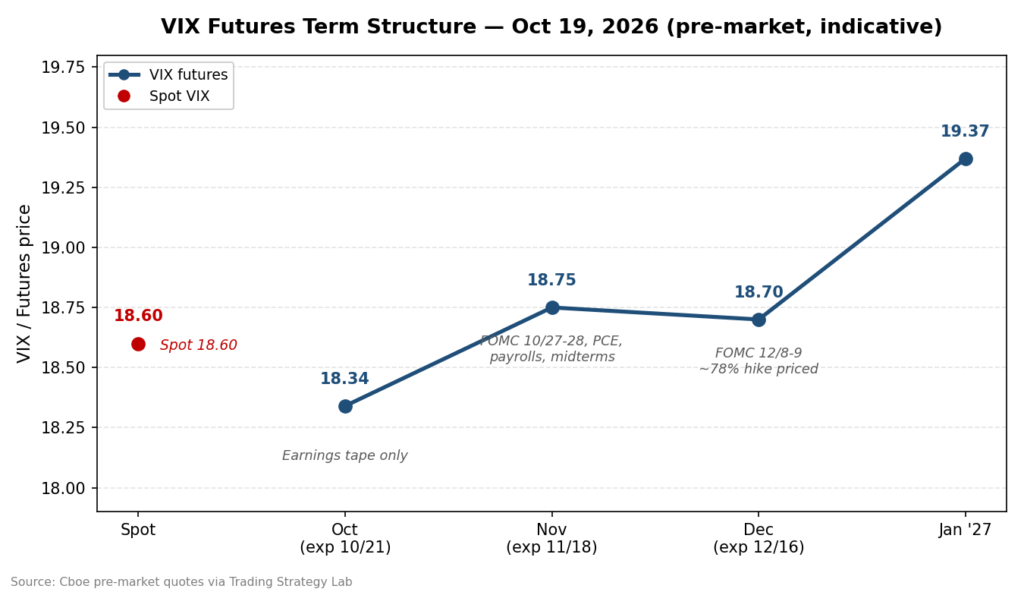
That changes Wednesday, when the October VIX contract expires and November becomes the front contract. November holds the real event tape: the October 27-28 FOMC meeting, the September PCE inflation report (around Oct 29), October payrolls, and the midterm elections. The curve should start pricing that risk properly once the calendar rolls.
What’s priced in:
- VIX around 18.6, down from Friday’s 20 (a four-month high)
- December Fed meeting: roughly 75-78% odds of another quarter-point hike
- October 27-28 FOMC: mostly priced as a hold for now
- 10-year Treasury near 5.1%, after its biggest weekly drop in over eight months
The tape this week: heavy earnings (Tesla on Wednesday; Meta, Netflix, and SpaceX on Tuesday), housing data, and flash PMIs on Friday. With the Fed in its blackout period until the 28th, headlines will move this market more than any slow grind.
Positioning: stay defensive on short volatility until Wednesday’s expiry rebuilds the curve. No unhedged short vega; wider wings or explicit credit buffers on anything new.
The technical read: Technicals: The Indicator Says Not Yet — the chart behind the AMBER call.
Educational market analysis only. Not investment advice. See Terms of Use.
Leave a Reply